


When Institutional Collections Begin to Speak: The Trust Structure of the High-End Art Market Is Being Rebuilt

By OGP Reporters / Members Contribute File Photos

Oh Good Party
Unlike Sotheby's and Christie's, which rely on global sourcing and pursue high turnover under a “light-asset” model, China’s “century-old institutions” fundamentally operate on a “heavy-asset” basis. Their collections are not commodities for sale, but scholarly foundations. This difference may appear conservative in overheated markets, but during periods of market cooling, it becomes the only true “safe haven” against price volatility.
For a long period of time, the narrative power of the Chinese art market was not held by collecting institutions, but was instead dominated by auction houses, capital, and short-term price fluctuations. However, the recent “Clouds of a Thousand Years — Treasures from the Duo Yun Xuan Collection” exhibition, by transforming long-invisible institutional holdings into assets recognizable by the market, has begun to shift this narrative structure. This is not merely an exhibition, but rather the collective re-emergence of a class of institutions—represented by Duo Yun Xuan, and together with Xiling Seal Society, Rong Bao Zhai, Tsi Ku Zhai, and Shanghai Cultural Relics Store forming a “century-old system,” which is now re-entering the center of both public and market attention.
This is not only an exhibition, but a reshuffling of pricing power—the price formation mechanism once dominated by the auction circulation system is gradually shifting toward long-term value judgment based on institutional collection systems.


I. Market Context: From “Traffic-Driven” to an Era of “Rights Confirmation”
Against the backdrop of tightening global liquidity, the behavioral logic of collectors has undergone a fundamental shift:
De-bubbling effect
Collectors are no longer paying for intangible “stories,” but are instead pursuing indisputable “evidence.”
Inventory logic
The “hidden reserves” of these century-old institutions can be regarded as quasi “gold reserves” of the Chinese art market. In an era where inflation and uncertainty coexist, institutional endorsement provides a form of credit support close to “collateralized by physical assets.”
Reconstruction of pricing logic
In the past, market prices were determined by “circulating works”; today, as “invisible assets” are transformed into “cognizable assets,” the market is establishing new pricing benchmarks.


If we extend the time horizon, the common characteristics of these institutions become clear:
• They originated from the traditional literati economy or the late Qing and Republican-era commercial system
• They simultaneously undertook the triple roles of “collection + circulation + scholarly judgment”
• They have long held a group of “ballast-level inventories” that do not enter the market
Yet they share one defining trait —— low profile, even deliberate invisibility.
Whether it is the secret reserves of Duo Yun Xuan, the legacy holdings of Rong Bao Zhai, or the acquisition system formed by the Shanghai Cultural Relics Store during the planned economy era, a large number of important works have not participated in market circulation. This has led to a direct consequence:
The market pricing system has long been determined by “circulating works,” rather than by the “highest-quality works.”


II. Deep Benchmarking: Chinese Legacy Institutions vs. International Auction Houses
For seasoned investors, understanding the underlying differences between these two systems is key to asset allocation.
Unlike Sotheby's and Christie's, which rely on global sourcing and pursue high turnover under a “light-asset” model, China’s “century-old institutions” fundamentally operate on a “heavy-asset” basis. Their collections are not commodities for sale, but scholarly foundations. This difference may appear conservative in overheated markets, but during periods of market cooling, it becomes the only true “safe haven” against price volatility.
International auction houses provide the “breadth” of transactions, relying on consignment and facing the risk of “excessive turnover,” while benefiting from international legal frameworks and global expert networks. By contrast, institutions such as Duo Yun Xuan provide the “depth” of history, forming a stable value foundation through long-accumulated collection systems and archival support.
The most critical action of this exhibition is not how many works were displayed, but rather this: the transformation of “invisible assets” into “cognizable assets.”
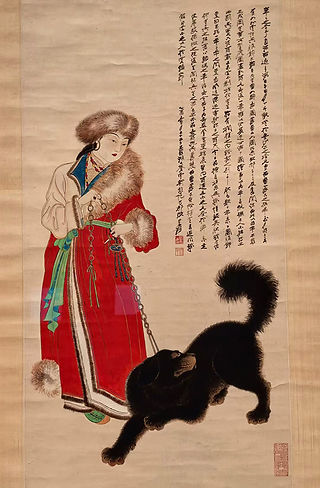
When works by figures such as Xu Beihong, Zhang Daqian, and Wu Changshuo appear collectively under the identity of “institutional collections,” they inherently possess three attributes:
• Clear provenance
• Long-term accumulation
• Absence of excessive market circulation
These three factors, in the current market environment, are far rarer than the works themselves.
This is precisely why such exhibitions will directly influence two core variables in the future auction market: pricing benchmarks and trust structures. In other words, international houses excel in liquidity, while Chinese legacy institutions excel in resilience. In a market downturn cycle, resilience typically offers greater risk resistance than liquidity.


III. A “Chinese Aesthetic Ecosystem” Built Through Multiple Pathways
If we examine several of these institutions, it becomes clear that they are not engaged in homogeneous competition, but rather form a structured division of roles:
Duo Yun Xuan: A bridge between reproduction and original works
Woodblock printing is not merely an item of intangible cultural heritage; it is also a “controllable reproduction system” that connects high-end art with mass consumption.
Xiling Seal Society: The rule-maker of the epigraphic (jinshi) system
The core of Xiling Seal Society lies not in transactions, but in “standards”—its scholarly authority in seal studies, epigraphy, and calligraphy.
Rong Bao Zhai: The orthodox narrative of literati art
Rong Bao Zhai functions more as a custodian of “cultural orthodoxy,” with its woodblock printing and painting business forming a stable aesthetic paradigm.
Tsi Ku Zhai: A bridge between the mainland and the international market
Long serving as a Hong Kong gateway, Tsi Ku Zhai has enabled Chinese painting and calligraphy to enter the global collecting system.
Shanghai Cultural Relics Store: A representative of institutional acquisition systems
Its value lies in its historical acquisition framework—it records the “official judgment” of an era.
This is not a singular market activity. Taken together, these pathways form a complete ecosystem: from scholarship, to collection, to circulation, to reproduction, and ultimately to international dissemination.


IV. Driving Forces of Market Transition and Allocation Logic
These institutions did not emerge today; however, their decision to “reappear” at this particular moment is driven by several practical factors:
1. The market is shifting from “speculation” to a “stock-based game”
High-frequency trading is declining, and collectors are placing greater emphasis on provenance, stability, and long-term value. This is precisely the domain where century-old institutions hold an advantage.
2. Truly exceptional works are becoming increasingly scarce
Top-tier works have largely entered museums, institutional collections, or long-term private holdings. What circulates in the market today are often works that have been traded repeatedly.
3. The cost of trust is rising
In an environment of information overload and authenticity concerns:
“who is selling” is becoming more important than “what is being sold.”
Based on OGP’s industry observations, future high-end collecting should focus on the following three variables:
1. The premium of “fresh-to-market” works
Works released for the first time from institutional collections (never previously seen at auction) inherently possess clear provenance and minimal prior circulation. Such pieces typically carry a 30%–50% premium potential in the secondary market.
2. The “dimensional shift” of aesthetic authority
The market is transitioning from “buyers dictate taste, and the market follows” to “institutions define quality, and buyers follow.” Investors should pay attention to niche categories being re-evaluated by institutions, such as epigraphy and seal art, which tend to be more resistant to volatility.
3. The “layered release” of assets
Future competition will not be limited to selling original works. Through derivatives such as woodblock printing and IP licensing, the financialization of artistic copyright becomes a high-margin, high-efficiency exit pathway.


V. Practical Implications for Collectors Beyond the Exhibition
What truly attracts collectors to such exhibitions is not sentiment, but a more direct question:
Will these works enter the market?
Historically, there are three primary pathways:
• Permanent retention (non-circulating)
• Targeted release (high-end auctions / private transactions)
• Derivative transformation (prints, cultural products, licensing)
By presenting both original works and woodblock prints, Duo Yun Xuan has effectively provided an answer: future competition will not simply be about “selling originals,” but about how to release value in layers.
If this exhibition is taken as a signal, several actionable conclusions emerge:
1. “Institutional provenance” will become a source of premium
The future high-end market will be defined not just by artist names, but by artist + institutional provenance. Due to high entry barriers, institutional resources are inherently closed. At the same time, structural limitations mean that state-owned institutions often lack flexibility in providing personalized services.
2. Longer realization cycles and ongoing revaluation
High-end artworks are non-standard assets with low turnover but strong long-term stability. Even with volatility, they tend to revert over time. Smaller categories such as epigraphy, tianhuang stone, and seals generally have relatively limited liquidity, yet demonstrate strong resilience within specific collector circles, with prices showing structural differentiation. Meanwhile, the “marketization of reproduction systems” is becoming increasingly normalized among enthusiasts and the broader public. Woodblock printing is not a “substitute,” but rather a tool for market segmentation and a source of cash flow, as well as a direct monetization channel for cultural dissemination.
3. The return of the private art advisor
As top institutions begin to release resources, and under this structural shift, the core question for collectors is no longer simply “what to buy,” but “how to access and understand these institutional systems.” This has given rise to asset management-oriented “private art advisor” models such as OGP (Oh Good Party). The key lies in leveraging expert knowledge, together with the endorsement of century-old institutions, to complete a closed loop from “estate liquidation” to “asset allocation.” Through a “black-box integration” of expert networks, private art advisors generate multidimensional reports drawing on specialists and authoritative institutions. For high-net-worth families, they provide one-stop solutions for art investment and the activation of existing assets, addressing challenges of intergenerational transfer and liquidity.


“Clouds of a Thousand Years” is not a nostalgic retrospective, but rather a structural reminder: beyond price, capital, and traffic, there has always existed another system within the Chinese art market—
one that is slower, but more stable;
one that is quieter, but defines the standard.
Particularly in the current period of market cooling, rational investment no longer lies in chasing bubbles, but in leveraging art asset management and aligning with the endorsement of authoritative institutions, thereby more effectively resolving the challenges of asset liquidity and authentication within a complex environment.


Comments